A visit with Arable farmer Charles Fairey in Linton
Farming in the East of England
Agriculture plays an important role in Eastern England. Over half the land is farmed. Cereal crops such as wheat and barley grow particularly well here, feeding humans and animals alike and accounting for millions of loaves of bread and even a third of England’s potatoes.
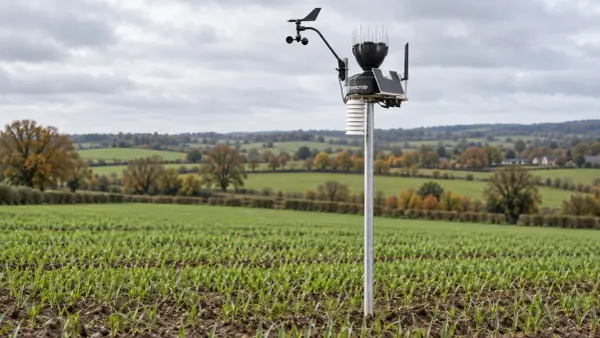
Charles Fairey has been an arable farmer in South Cambridgeshire for the last 25 years, with a thousand hectares of arable crops. A year ago, Sencrop approached him about putting a weather station on his 1000 hectare farm.
12 months later, here’s what he has to say about his experience with the next generation of weather stations!
Real-time data from the field
“What I find very useful is the cumulative data.”
Collecting weather data from his farm has always been a priority for Charles. After quickly installing his station, he began using the weather app on a daily basis. The cumulative data feature provides him with the total amount of rainfall over a specific period of time. Farmers can select the metric that interests them the most (temperature, rainfall, etc.) and keep track of it at a glance.
Cumulative rainfall in the Sencrop app
The historical temperature and rainfall data also enables Charles to compare what is happening on his farm today to previous weeks, months or years. He can select the time frame that interests him and quickly understand the data displayed in an easy-to-read chart. Farmers can select up to four Sencrop stations at a time to compare and contrast.
“The Sencrop weather station has allowed me to gather information on rainfall and temperature which affects my crops and gives me a better understanding of their impacts.”
Thank you Charles for a lovely visit to Fairey Farm!
Twice a month, news on agricultural weather, ag-tech, and Sencrop innovations to enlighten you and help you make better decisions every day. Subscribe now! 👇