Sencrop has reached over 250 private networks in Europe!
• 1 min read
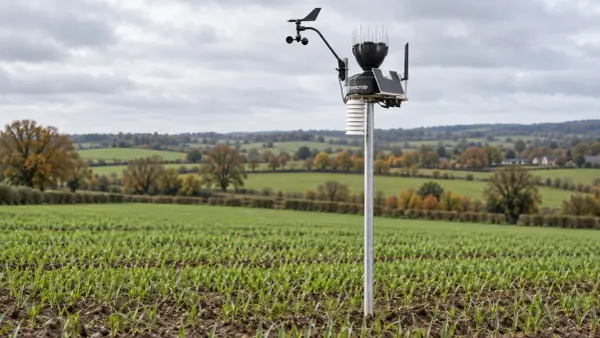
In just a few years, Sencrop has become the go-to UK & European connected weather data provider for farmers. Thanks to its over 15,000 weather stations across the continent, the company provides its services to more than 13,000 farms in the UK & Europe. In addition to providing a technologically innovative tool, Sencrop offers a collaborative experience by connecting farmers within an organisation through a service of ‘private networks’ of weather stations. But what do these networks consist of exactly?
A private network at Sencrop is a collection of agrometeorological stations in a particular area. The fact that the stations are connected to each other allows the Sencrop app to provide subscribers (farmers, agronomists, system operators) with real-time weather data, as well as provisional and historical data. Each network is operated, personalised and named by a farmers’ group.
This type of service provides a multitude of benefits:
Creating a network of subscribers
Analysing hyper-local weather data
Offering an innovative service
Providing tailored advice
At the end of 2020, Sencrop reached over 250 private networks in the UK & Europe. These networks comprise over 9,000 stations and bring together approximately 8,000 farmers. Each network is unique in terms of how it operates, its size and the number of weather stations it has. Today, nearly 10 per cent of the networks have more than 100 connected farmers. Furthermore, over 50% of networks have more than 10 stations and 10% of those even have more than 100 stations!
Today, the world of agriculture is in transition and has to face a number of challenges, which creates opportunities for new technologies. However, it is important that they be accessible and beneficial to everyone. With its offer of collaborative private networks, Sencrop encourages cooperation between parties. It facilitates communication and helps everyone achieve better working conditions and improved performance.
The positive attitude toward private networks offered by Sencrop highlights the willingness of organisations to lead the agri-environmental transition and also shows that groups are looking for precision weather data.
by Louison Raud
The Sencrop team
Share this article
A newsletter on weather and Ag-Tech
Twice a month, news on agricultural weather, ag-tech, and Sencrop innovations to enlighten you and help you make better decisions every day. Subscribe now! 👇