Sencrop: the agricultural weather application moves up a gear
• 3 min read
At Sencrop, 2022 is starting with a wind of change full of new features! Let us show you around!
We took advantage of the summer to meet you and get your feedback. Until now, the Sencrop application has mainly allowed you to benefit from local weather data in real time. Our aim is for you to make the most of this data to help in your day-to-day decisions. This transformation has given rise to new features that are already available in the application, or will be in the coming months.
Kevin Guilbert, Product Manager at Sencrop, explains this new feature. 👇
What is your role at Sencrop? Can you tell us about your daily life?
I am responsible for the product team (i.e. the Sencrop application). My day-to-day job is to spend time with our customers to understand their problems, and with the designers and developers to provide solutions.
What new features can farmers expect on the Sencrop app in 2022?
At Sencrop, our mission has always been to help all farmers with their day-to-day decision-making and crop risk management.
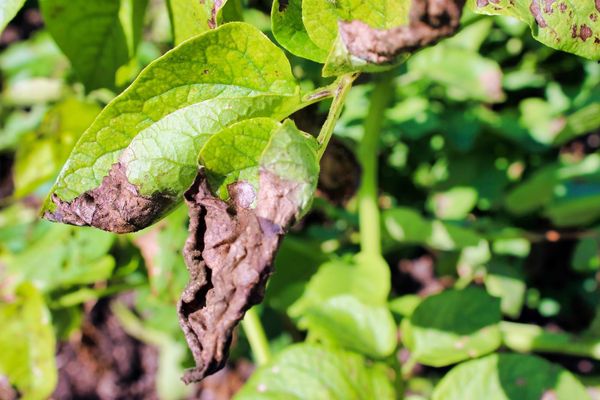
In 2022, you will be able to add your crops directly into Sencrop and use agronomic models to monitor growing stages, diseases, pests, treatments and irrigation. These models will be adapted to your crops (crop, sowing date, region, earliness...) and directly connected to your weather stations.
Where did the need for this change come from? What are the benefits for the end user?
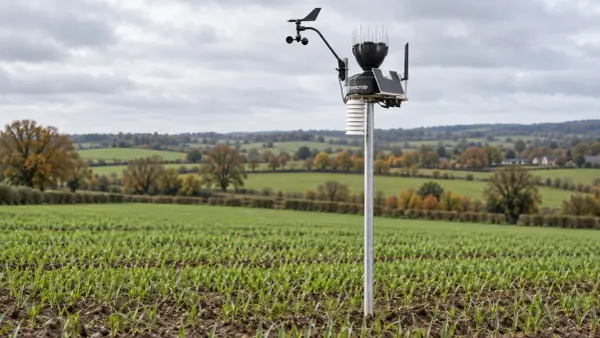
Farmers use the weather stations obviously to know the past/present/future climatic conditions in the field, but also and above all to identify risk periods (diseases, pests, water stress) and to plan interventions (sowing, treatment, harvesting).
The idea is to simplify the use of risk and intervention management: all you have to do is provide your crop for that site! Then, we will make these different indicators available to you, keeping the data entry and configuration to a minimum.
What were the difficulties encountered in developing this last component? What were the solutions found?
The challenge and difficulty is to provide quality models. To do this, we have developed two axes:
Building partnerships with institutes or companies recognised for their expertise in the field. These partners are now directly accessible on your application
We will also give our customers the possibility to recalibrate the models by making observations. With more than 20,000 stations in Europe and 15,000 customers, we will have enough feedback to refine the models for the current year and future campaigns.
How do you develop new features in the app? Can you give us an example?
Our development ideas come from the research we do with our users, customers (questionnaires, interviews, demonstrations, exhibitions...).
For example, at the SITEVI 2021 the french agricultural show, we conducted more than 50 interviews with our customers to present prototypes and discuss Sencrop and the farming industry. We then adapt our prototypes according to the feedback and work with the designers and developers to propose the most user-friendly solution.
Twice a month, news on agricultural weather, ag-tech, and Sencrop innovations to enlighten you and help you make better decisions every day. Subscribe now! 👇