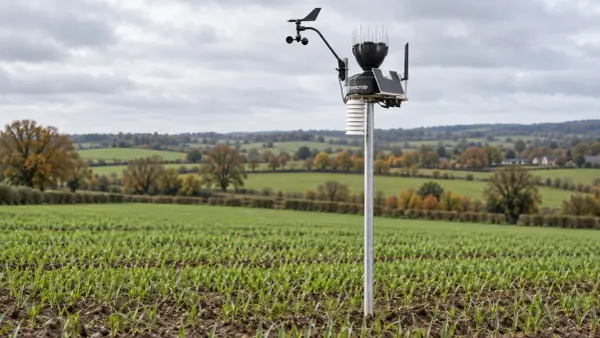
Arable farmers in the UK can now make use of super-local weather indicators combined with disease forecasting to make more efficient use of control measures like fungicide applications.
Sencrop, which is known for its highly accurate smart local weather stations, has joined forces with the Information System for Integrated Plant production (ISIP) to provide bespoke disease forecasting for farmers based on pooled and individual data.
video explaining ISIP main features
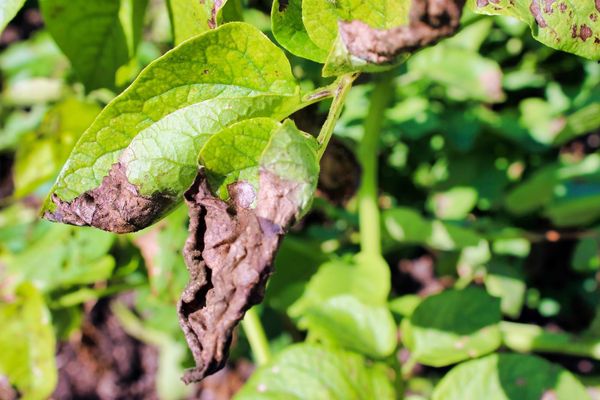
Taking into account local temperature, humidity and precipitation, the system will predict risk levels for diseases affecting winter wheat, barley, rye, triticale and spring barley between 15 February and 30 June. This will enable farmers to react to times of high disease pressure and protect crop quality and yield.
“Farmers can connect their individual crops to local weather data via their weather station and app, to receive crop-specific information and risk calculations,”
says Lucie D'Haene, product manager and agronomist at Sencrop. Common diseases covered include Septoria tritici, yellow and brown rust, powdery mildew, leaf blotch, net blotch, ramularia and leaf rust.
“This will support farmers in assessing the disease infection pressure and assist them in taking the right actions to maximise crop quality.”
“By integrating local weather data, the quality of the model statements is raised to a new level. No other data source can make it more precise."
Sencrop is now working with farmers, producer groups, agronomists and consultants in 26 countries worldwide to provide ultra-local real-time weather data. By integrating with ISIP it’s giving farmers on its PLUS plan an easy and quick overview of which crops require action.
“By seeing the crop risk in real time, farmers can easily drive to the affected fields for on-site inspections, saving time and fuel,”
says Harry Atkinson, UK Business Development Manager. And he concludes:
“Given the soaring cost of inputs, from fuel to fertiliser, farmers want to hone efficiencies as much as possible, and combining individual and pooled data can help them to do that.”
About Sencrop
Sencrop is an innovative ag-tech startup based at Euratechnologies in France, the third-largest startup accelerator in Europe. The company, founded in 2016 by Michael Bruniaux and Martin Ducroquet, became the European leader in 6 years. Sencrop has the biggest ag-weather network of stations in Europe with more than 18,500 growers connected to its solution, and counts on 100 dedicated farmer-servicing members in its European offices. In 2020, Sencrop was placed on AgFunder’s Top 10 global ranking, the reference media for start-ups’ venture capitalists, after its US$10 million Series A fund raising in 2019. Sencrop won a SIMA Innovation Award, highly prized within the agricultural world, and a silver SIVAL medal. It is also a member of the Hardware Club. www.sencrop.com
Twice a month, news on agricultural weather, ag-tech, and Sencrop innovations to enlighten you and help you make better decisions every day. Subscribe now! 👇