Used to abnormally mild (and sometimes hot) temperatures, the United Kingdom had its coolest summer in 9 years. Find out more about the summer weather.
Summer 2024 is the coolest in 9 years!
According to official climate data, temperatures were cooler than normal, on average, over the three summers combined: June, July and August. As always, there were big differences in temperature from one week to the next, and from one region to the next. For example, the weather in the south of England was very different from that in the north-west of Scotland.
As a whole, the summer remained fairly close to seasonal values. However, there were some very cool days and some that were considerably warmer than normal. The temperature deficit was greatest in the north-west of Scotland. The same was true for Northern Ireland. To sum up, temperatures across the UK were on average around -0.4°C/-0.5°C below normal.
While this may seem relatively cool, it makes the summer of 2024 the coolest summer season since 2015 according to official Met Office data. It is essential to remember that global warming remains omnipresent. Indeed, it will be quite possible in the future to see cooler-than-normal seasons. But they will become rarer and, above all, much less significant.
It was in the north-west of Scotland that rainfall was the heaviest compared with seasonal normals (period 1991-2020). The rainfall surplus is close to 70% in some parts of Scotland. Contrary to the east and a very large part of the south of the UK, where the average deficit is between 20% and 30%.
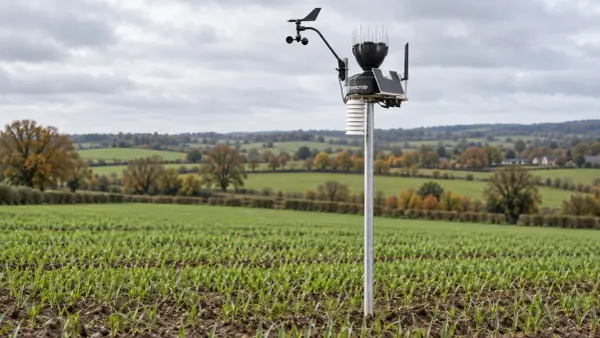
At the Sencrop network of stations, this difference in rainfall is very visible. Cumulative rainfall was close to 80 mm in the south-east of the UK. The heaviest amounts were close to 300 mm in Scotland and the western part of Northern Ireland.
Twice a month, news on agricultural weather, ag-tech, and Sencrop innovations to enlighten you and help you make better decisions every day. Subscribe now! 👇