Adapt your agricultural practices according to your soil type
• 4 min read
Each soil type has its own challenge! In this article, we focus on four soil compositions and their main challenges: clay, loam, sand, and humiferous.
Why does agricultural soil influence crop-related decisions?
Each agricultural soil has physical and chemical properties that influence crop growth. Texture, water retention capacity, structure, and depth: all factors that determine the timing of interventions, the choice of crops, and even irrigation needs. Understanding the specific characteristics of your soil type allows you to better understand climatic hazards, for greater precision in adapting your cultivation practices.
💡
Field tip: To accurately determine the composition of your soil, a granulometric analysis allows you to measure the proportions of sand, silt, and clay. This allows you to calibrate Sencrop tools with even greater precision (configuration in the app according to soil type).
Clay soils: sow at the right time
Soils composed primarily of clay are rich and capable of retaining water, but their compact structure makes early sowing difficult. They become waterlogged in winter and dry out, forming cracks in summer.
One of the major challenges is to aim for a period when the soil is neither too wet nor too dry, to intervene without compacting, whatever strategy is chosen : direct seeding, reduced work or conventional preparation.
Recommended features: weather reports and forecasts
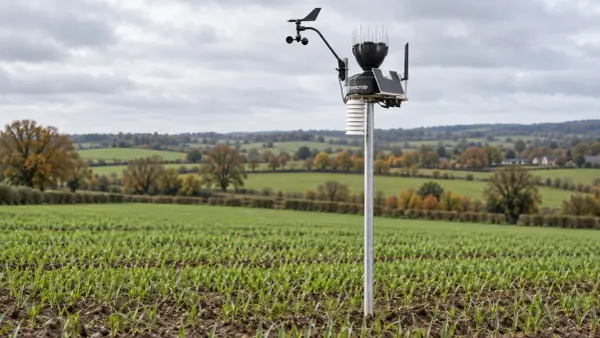
On the Sencrop app, weather readings for your fields are transmitted live. This way, you can track rainfall in real time to choose the right moment to sow. You can also set up alerts to be notified (text message, call) when the conditions are right (e.g., 5 days without rain).
Finally, follow the forecasts for your field for up to 7 days, and anticipate the ideal window.
Silty soils: avoid crusting during growth
Highly fertile and easy to work, silt-rich soils suffer from low structural stability. Heavy rainfall can create a surface crust, preventing seedling emergence. The soil then becomes compacted and impermeable, hindering infiltration and growth.
Recommended features: rain radar, forecast and alert
The Sencrop app allows farmers to anticipate heavy rain and intervene before (cover the soil, limit fine work) or after (use a light tool to break the crust).
To use on the Sencrop application:
The rain radar shows you the movement of showers within ±2 hours and their intensity (the darker, the heavier the rain).
The weather forecast tells you up to 7 days in advance the risk of rain and the number of millimeters expected.
You can also set an alert during your crop growing season, to be notified by SMS or phone call as soon as rainfall reaches a certain amount of mm in a given time period.
Sandy soils: controlling irrigation in a filtering soil
When it is predominantly sandy, the soil is light, well-drained, and easy to work. However, it has low water retention capacity. Water quickly seeps deep into the soil, sometimes carrying nutrients with it. This exposes crops to a high risk of water stress, particularly during the summer or in the absence of rain. To optimise yields, irrigation must be frequent, targeted, and adjusted to the plants' actual needs.
Recommended feature: Water balance tracking
Among the two weather stations offered by Sencrop for managing irrigation, the Irricrop Pack (Raincrop + Windcrop +Solarcrop) allows you to accurately calculate evapotranspiration (ETP), the main cause of water loss in sandy soil. In addition to the transmitted weather data, you configure your soil type and your crop to adapt the monitoring graph and model the available water reserve. This will make it easy to detect when your soil is experiencing water stress.
Each farmer can thus irrigate wisely to optimise their yields, while avoiding both water stress and water waste.
Humiferous soils: organic richness, but water risks
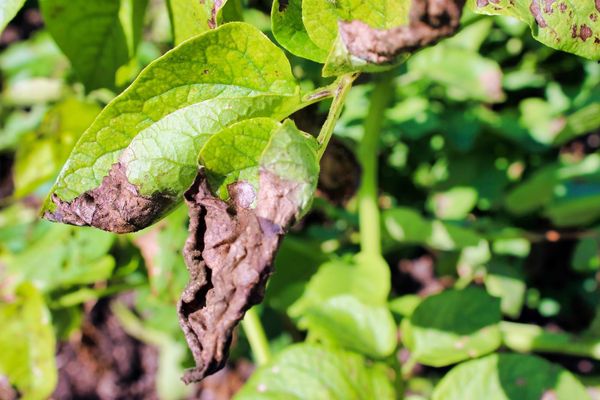
Humiferous soils, often derived from peat environments, are highly fertile thanks to their high organic matter content. Their spongy structure allows them to effectively retain water, which is an advantage during dry periods. However, this retention capacity becomes a disadvantage in the event of excessive rainfall: the soil can remain waterlogged, slowing crop emergence and significantly increasing the risk of disease, particularly fungal disease. Conversely, during prolonged dry periods, the soil can become hydrophobic and difficult to re-wet.
Recommended functionality: cumulatives, processing windows, weather curves and connected DSTs
On Humiferous soil, excessive humidity constitutes a major risk: it encourages the development of fungal diseases (mildew, powdery mildew, rust, etc.) and complicates field work.
To secure your agronomic decisions despite these constraints, Sencrop recommends the use of:
processing windows to identify favorable weather slots,
temperature and humidity curves to visualise risk periods,
and integration with phytosanitary DSTs to anticipate the evolution of diseases.
🎯
Objective: trigger your treatments only when it is relevant, reduce losses, save on your inputs, and preserve the potential of your crops in an often unstable environment.
Conclusion: one soil, one strategy
🔍
Please note: In real-life conditions, soil is never 100% clayey, sandy, or humiferous (with some exceptions). It is always a mixture of sand, silt, clay, and organic matter, with varying proportions depending on the area.
Understanding the limitations of each agricultural soil allows you to make the right decisions at the right time. Precision agriculture today relies on reliable microclimatic data, taken directly from the field. Regardless of the soil you're working on, tools exist to manage your crops with greater peace of mind.
The Sencrop team
Share this article
A newsletter on weather and Ag-Tech
Twice a month, news on agricultural weather, ag-tech, and Sencrop innovations to enlighten you and help you make better decisions every day. Subscribe now! 👇